语法.note
一、A 和 An 的不同用法:
用法:
1.  Singular nouns and the first time we refer to a person, animal or thing.
1. 单数名词以及我们第一次指代人、动物或事物。
a child    //一个孩子
an elephant    //一头大象
a television    //一台电视

2. We don't use A/AN with possessive pronouns, demonstratives or cardinal numbers.
2. 我们不将 A/AN 与所有格代词、指示词或基数词一起使用。
My shirt is dirty.     //我的衬衫脏了。
This car is expensive.     //这辆车很贵。
One person is in the reception.    //接待处有一个人。

3. We use ONE (or more) instead of A/AN when the number is important.
3. 当数字很重要时,我们使用 ONE(或多个)代替 A/AN。
There is only one exit from the airport.    //机场只有一个出口。
区别:
A is used when the next word begins with a consonant sound (b, c, d, f, g, h, j, k etc).
当下一个单词以辅音(b、c、d、f、g、h、j、k 等)开头时,使用 A。
a book    //一本书
a table    //一张桌子
a clock    //一个钟
a university (because the beginning of university sounds like YOU-niversity)    //一所大学(因为大学的开头听起来像YOU-大学)

AN is used when the next word begins with a vowel sound (a, e, i, o, u).
当下一个单词以元音(a、e、i、o、u)开头时,使用 AN。
an apple    //苹果
an elephant    //一头大象
an umbrella    //一把雨伞
an hour (because the H is silent)    //一个小时(因为 H 不发音)
定冠词 The
1.  A singular or plural noun when it is clear/obvious which person or thing we are talking about.
1. 当我们正在谈论的人或事物很清楚/明显时,使用单数或复数名词。
There is a lamp in my bedroom. (we mention the lamp for the first time)    //我的卧室里有一盏灯。 (我们第一次提到灯)
The lamp is next to the desk.    //台灯在桌子旁边。

2. Anything which we identify immediately.
2. 我们立即识别出的任何内容。
We watched the new Brad Pitt movie last night.    //昨晚我们看了布拉德·皮特的新电影。

3. Musical instruments (the violin, the guitar, the drums, the flute, the piccolo).
3.乐器(小提琴、吉他、鼓、长笛、短笛)。
She plays the piano.    //她弹钢琴。

4. Something that is unique or there is only one.
4. 独一无二或只有一个的东西。
the sun    //太阳
the moon    //月亮
the internet.    //互联网。

5. Names of rivers, seas, oceans, mountain ranges and deserts (always in 	capitals).
5. 河流、海洋、大洋、山脉和沙漠的名称(总是大写字母)。
The Mississippi River    //密西西比河
The Black Sea    //黑海
The Andes    //安第斯山脉
The Sahara Desert    //撒哈拉沙漠

6. Directions (cardinal points).
6. 方向(基点)。
the west    //西方
the south-east    //东南部
the north-west.    //西北。
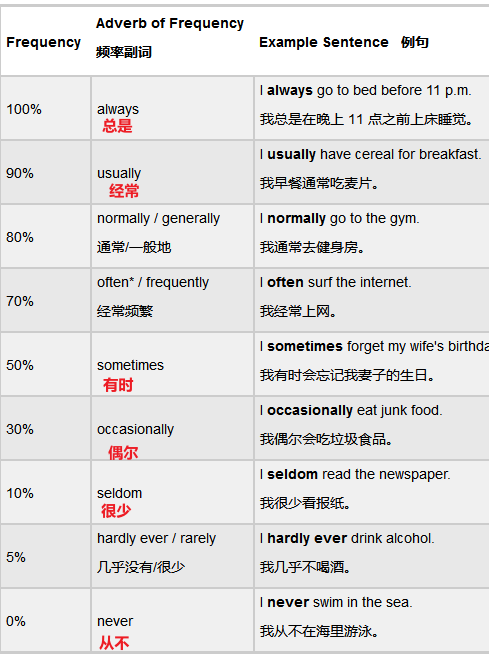
二、频率副词:
三、副词、形容词:
1、副词:
# 副词修饰动词
# 副词有时也能修饰名词

My dog eats slowly.     //我的狗吃得很慢。
Slowly is an adverb since it describes the way my dog eats.
慢慢地是一个副词,因为它描述了我的狗吃东西的方式。

# 副词修饰名词:
How does my dog eat? Slowly.    //我的狗怎么吃东西?慢慢地。
2、形容词:
# 形容词修饰名词

He is very rich.    //他非常富有。

They are extremely happy.    //他们非常高兴。

She was totally crazy.    //她完全疯了。

My dog is well trained.    //我的狗训练有素。
3、具有相同形式的 副词、形容词:
fast, hard, early, late, high, low, right, wrong, straight and long四、do、does、did、done:
The Verb - To Do动词 - 要做
The verb TO DO  has four forms.动词 TO DO 有四种形式。
Present Tense: Do / Does
现在时:做/做

Past Tense: Did
过去时:做了

Past Participle: Done
过去分词:完成

TO DO - Present Tense - (Do / Does)TO DO - 现在时 - (Do /Does)
The present tense of TO DO is:TO DO 的现在时是:
I / you / we / they - DO我/你/我们/他们 - DO
  he / she / it - DOES 他/她/它 - 是

I do my laundry on Saturdays.
我星期六洗衣服。

They do their chores when they arrive home.
他们到家后就做家务。

He does nothing all day.
他整天什么也不做。

She does charity work when she has time.
她一有时间就做慈善工作。

TO DO - Past Tense  - (Did)待办事项 - 过去时 - (Did)
The past tense of DO is DID for all subjects:所有科目的 DO 过去式都是 DID:
I / you / we / they / he / she / it - DID我/你/我们/他们/他/她/它-DID

I did my homework in record time.
我以创纪录的时间完成了作业。

We did everything we could to help.
我们竭尽全力提供帮助。

He did a somersault on the trampoline
他在蹦床上翻了跟头

TO DO - Past Participle   - (Done)TO DO - 过去分词 - (完成)
The past participle of DO is DONE. Remember that past participles are accompanied by TO HAVE or TO BE (in the correct tense):DO 的过去分词是 DONE。请记住,过去分词伴有 TO HAVE 或 TO BE(正确时态):

I have done my homework.
我已经做完作业了。

He has done a good job.
他做得很好。

The video will show you how it is done.
该视频将向您展示它是如何完成的。

The report was done on time.
报告按时完成。

TO DO - To replace a verbTO DO - 替换动词
We sometimes use the verb DO to replace a verb when the meaning is clear or obvious. This replacement is more common in informal spoken English:当含义明确或明显时,我们有时会使用动词 DO 来代替动词。这种替换在非正式英语口语中更常见:

Do I need to do my hair? (do = brush or comb)
我需要做头发吗? (do = 刷子或梳子)

Have you done the dishes yet? (done = washed)
你洗完碗了吗? (完成=洗过)

I'll do the kitchen if you do the lawns (do = clean, do = mow)
如果你整理草坪,我就整理厨房(do = 清洁,do = 修剪)
五、复数名词:
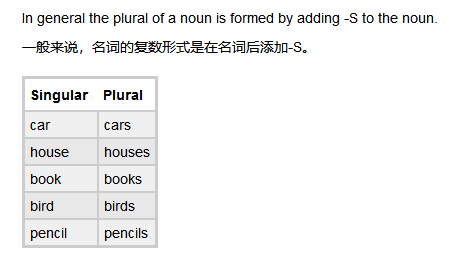
1、一般来说,直接在名词后 + S:
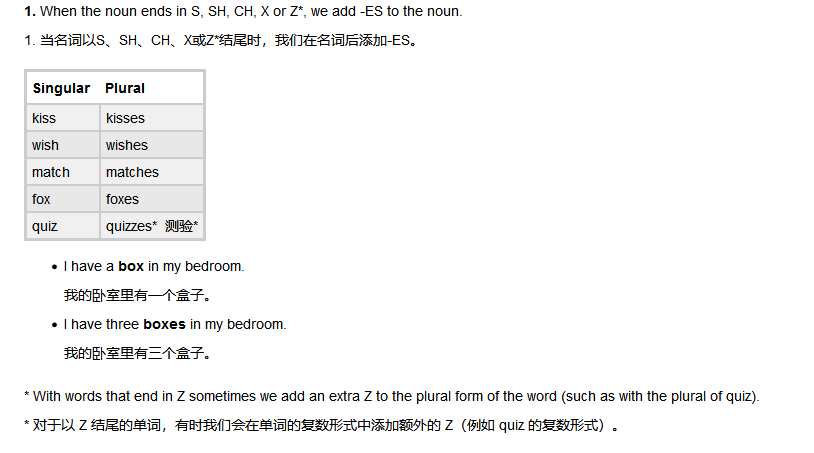
2、当名词以S、SH、CH、X或Z*结尾时,我们在名词后添加-ES。
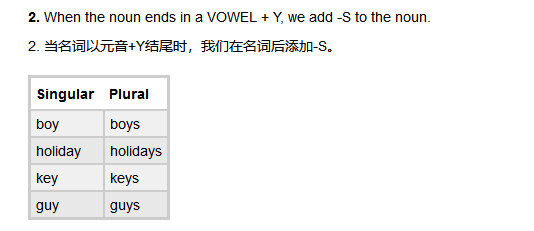
3、当名词以元音+Y结尾时,我们在名词后添加-S
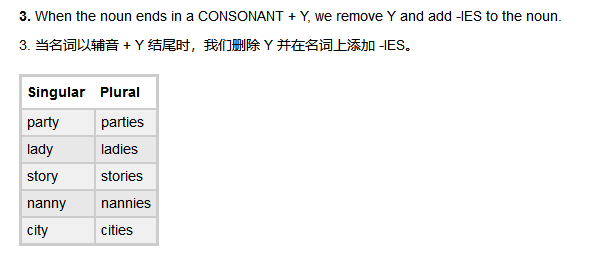
4、当名词以辅音 + Y 结尾时,我们删除 Y 并在名词上添加 -IES。
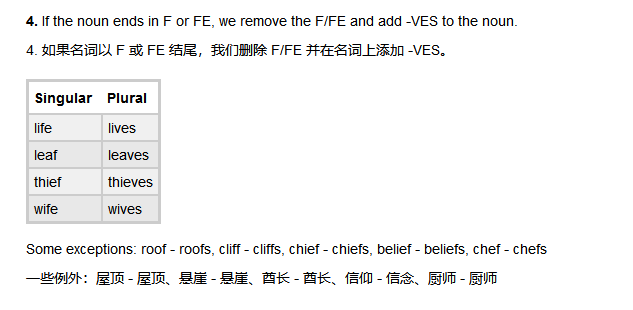
5、如果名词以 F 或 FE 结尾,我们删除 F/FE 并在名词上添加 -VES。
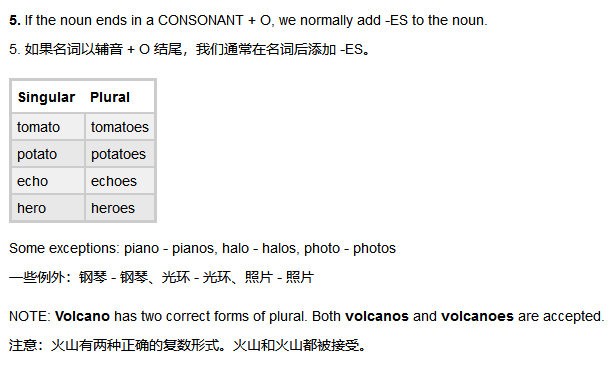
6、如果名词以辅音 + O 结尾,我们通常在名词后添加 -ES。
7、有许多名词不遵循这些规则。它们是不规则的